
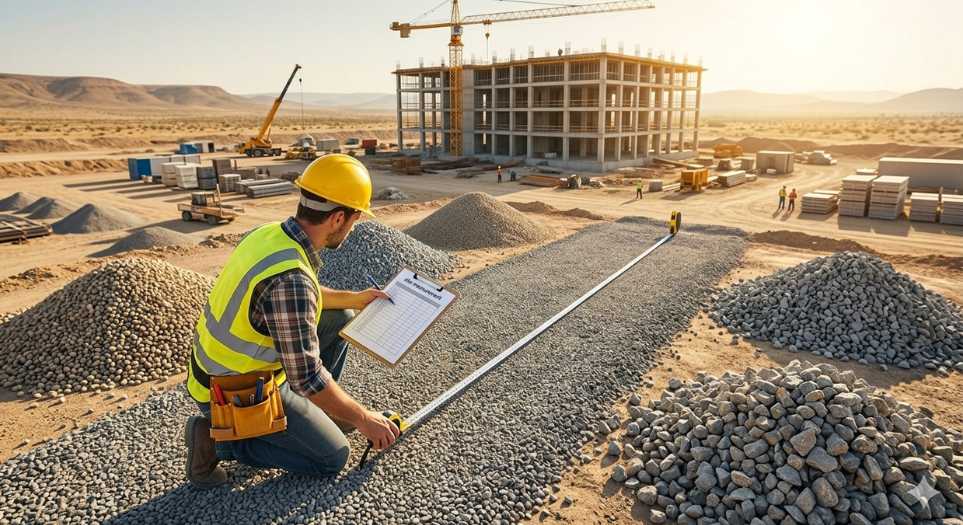
Planning a driveway, garden path, or drainage project? One of the first questions every homeowner and contractor asks is: how much gravel do I actually need? Order too little and your project stops halfway. Order too much and you waste money on material sitting in your yard for months.
A gravel calculator solves this problem instantly. Enter your area dimensions and depth, and you get the exact volume and weight of gravel required — in tons, cubic yards, or bags. No guesswork, no wasted trips to the store.
This complete guide explains how to use a gravel calculator, which gravel types to choose, how to read your results, and how to avoid the most common estimation mistakes on any construction or landscaping job.
H2: What Is a Gravel Calculator?
A gravel calculator is a free online tool that estimates the amount of gravel needed to fill or cover a specific area. You provide three simple inputs — length, width, and depth — and the calculator instantly returns the volume in cubic feet, cubic yards, and cubic meters, along with the estimated weight in tons and kilograms.
This tool is used daily by contractors, landscapers, DIY homeowners, and civil engineers for projects ranging from simple garden paths to full driveway installations and large drainage systems.
Whether you need a gravel calculator for a driveway, a patio base, a French drain, or a raised garden bed, the process is the same. Measure, enter, calculate, and order.
H3: Why Use a Gravel Calculator Instead of Guessing?
Most people underestimate how much gravel they need. Gravel is denser and heavier than it looks. A thin-looking 4-inch layer over a 20-foot driveway can easily require 8 to 10 tons of material.
Using a gravel calculator removes the guesswork entirely. You get a precise number you can take straight to your supplier, whether you are buying bagged gravel from Home Depot or placing a bulk delivery order. This saves money, saves time, and prevents the frustration of running short on material halfway through a job.
Gravel Calculator Formula – How the Math Works
The formula behind every gravel calculator is simple:
Volume = Length x Width x Depth
Once you have the volume in cubic feet, divide by 27 to get cubic yards. Then multiply by the density of your gravel type to get the weight in tons.
For example:
Length 20 feet x Width 10 feet x Depth 0.33 feet (4 inches) = 66 cubic feet
66 divided by 27 = 2.44 cubic yards
2.44 x 1.4 tons per yard = approximately 3.4 tons of gravel needed
This is exactly what a gravel calculator tons tool does for you automatically in seconds.
Standard Gravel Density Values
Different types of gravel weigh differently per cubic yard. A sand and gravel calculator uses these standard density values:
Pea gravel — approximately 1.4 tons per cubic yard
Crushed stone 3/4 inch — approximately 1.35 tons per cubic yard
Mixed gravel — approximately 1.35 to 1.5 tons per cubic yard
Sand and gravel mix — approximately 1.5 tons per cubic yard
20mm gravel — approximately 1.4 tons per cubic yard
Dry sand — approximately 1.5 tons per cubic yard
These density values are why a gravel tonnage calculator gives slightly different results for different gravel types even when the volume is the same.
How to Use the Gravel Calculator – Step by Step
Using a gravel calculator square feet tool takes less than two minutes. Follow these five simple steps:
Step 1 – Measure Your Area
Measure the length and width of the area you want to cover. Use feet or meters — whatever is easier for your project. For driveways, measure from end to end and side to side.
For irregular or L-shaped areas, break the space into smaller rectangles. Calculate each rectangle separately and add the volumes together at the end.
Step 2 – Decide Your Depth
Choose how deep you want your gravel layer. The right depth depends on how the area will be used:
Decorative garden path or flower bed — 2 to 3 inches
Light-use driveway for cars — 4 inches
Standard residential driveway — 4 to 6 inches
Heavy vehicle driveway or commercial use — 6 to 8 inches
French drain or drainage trench — 8 to 12 inches
For most homeowners using a gravel calculator for driveway projects, 4 to 6 inches is the standard recommendation.
Step 3 – Enter Values Into the Calculator
Type your length, width, and depth into the gravel calculator fields. Select your units — feet, inches, meters, or centimeters. The calculator converts everything automatically so you do not need to worry about unit conversion.
Step 4 – Read Your Results
The gravel calculator will display your results in multiple formats:
Volume in cubic feet
Volume in cubic yards
Volume in cubic meters
Estimated weight in tons
Estimated weight in kilograms
Number of bags needed (for bagged gravel purchases)
Use the cubic yards or tons figure when calling a bulk supplier. Use the bag count when shopping at Home Depot or a local hardware store.
Step 5 – Add a 10 Percent Safety Buffer
Always order 5 to 10 percent more gravel than your calculated amount. Gravel compacts and settles over time. Uneven ground consumes more material in low spots. Having a small buffer on hand prevents running short and paying for an extra delivery.
Gravel Calculator for Driveway – Full Example
Let us walk through a complete real-world example using a driveway gravel calculator.
Project Details:
Driveway length — 60 feet
Driveway width — 14 feet
Gravel depth — 4 inches
Gravel type — Crushed stone
Step 1: Convert depth to feet — 4 inches divided by 12 = 0.333 feet
Step 2: Calculate volume — 60 x 14 x 0.333 = 279.7 cubic feet
Step 3: Convert to cubic yards — 279.7 divided by 27 = 10.4 cubic yards
Step 4: Calculate weight — 10.4 x 1.35 = approximately 14 tons
Step 5: Add 10 percent buffer — 14 x 1.10 = approximately 15.4 tons
Final Order: 15 to 16 tons of crushed stone gravel for this driveway.
This is the exact kind of result a good gravel for driveway calculator delivers in under a minute — saving you the math and giving you a number ready to give your supplier.
Gravel Calculator Square Feet – How Depth Changes Your Order
Many people already know their project area in square feet and simply need to know how depth affects the total amount. Here is a simple breakdown for 500 square feet at different gravel depths:
At 2 inches deep — 3.1 cubic yards — approximately 4.3 tons
At 3 inches deep — 4.6 cubic yards — approximately 6.5 tons
At 4 inches deep — 6.2 cubic yards — approximately 8.7 tons
At 6 inches deep — 9.3 cubic yards — approximately 13 tons
As this shows, doubling the depth doubles your gravel order. This is why choosing the right depth for your specific project is just as important as measuring your area correctly. A gravel calculator square feet tool makes it easy to compare depths and find the most cost-effective option.
Types of Gravel and Which One Is Right for Your Project
Not all gravel is the same. Different sizes and types suit different applications. Choosing the wrong type affects both the look of your project and how well it performs over time.Pea Gravel
Pea gravel is small, smooth, and rounded — typically 3/8 inch in diameter. It is popular for playgrounds, garden paths, and decorative landscaping because of its clean appearance and comfortable walking surface. A pea gravel calculator uses a density of approximately 1.4 tons per cubic yard.
3/4 Inch Crushed Stone
This is the most common choice for driveways and base layers. The angular shape of crushed stone means it compacts tightly and resists shifting under vehicle weight. A 3/4 gravel calculator typically uses 1.35 to 1.4 tons per cubic yard for estimates.
20mm Gravel
Popular across the UK and many international markets, 20mm gravel is similar in size to 3/4 inch crushed stone. A 20mm gravel calculator works on the same volume-to-weight principle but uses metric units. It is commonly used for driveways, drainage layers, and concrete mixing.
Sand and Gravel Mix
A sand and gravel mix is used primarily as a sub-base layer under concrete slabs, pavers, and asphalt. It compacts well and distributes weight evenly. A sand and gravel calculator or sand gravel calculator uses a density of approximately 1.5 tons per cubic yard for this mixed material.
Gravel Rock for Drainage
Larger, open-graded gravel rock is used in drainage applications like French drains, dry creek beds, and retention areas. It allows water to pass through quickly. When estimating for drainage projects, a gravel rock calculator gives you the right volume based on trench or bed dimensions.
Bagged Gravel vs Bulk Delivery – Which Should You Choose?
When to Buy Bagged Gravel from Home Depot
For small projects under 1 cubic yard — a flower bed border, a small path, or a few decorative garden areas — bagged gravel is the most convenient choice. Home Depot sells pea gravel, decorative stone, and crushed gravel in 0.5 cubic foot bags.
Using a home depot gravel calculator tells you exactly how many bags to put in your cart. One cubic yard equals 54 bags of 0.5 cubic foot gravel. For a small project needing 0.5 cubic yards, you would buy 27 bags of bagged gravel from Home Depot.
Home depot bagged gravel is easy to transport, easy to store, and requires no minimum order. The cost per cubic yard is higher than bulk, but for small jobs the convenience is worth it.
When to Order Bulk Gravel Delivery
For any project over 1 to 2 cubic yards, bulk delivery from a local stone yard, quarry, or landscape supplier is the better financial decision. Bulk gravel is significantly cheaper per ton than bagged material.
When calling for a bulk quote, use your gravel calculator yards result to give the supplier an exact cubic yard number. Many suppliers also prefer quotes in tons, so having both figures from your gravel calculator tons result is helpful.
Bulk delivery typically costs $50 to $150 in delivery fees depending on your location and the quantity ordered. Even with delivery added, bulk orders are usually much cheaper than buying individual gravel bags from Home Depot for any project over a few cubic yards.
How Much Does Gravel Cost?
Gravel prices vary by type, region, and purchase method. Here are general price ranges to help you budget:
Bulk pea gravel — $25 to $45 per ton
Bulk crushed stone — $20 to $40 per ton
Bulk mixed gravel — $15 to $35 per ton
Bagged gravel at Home Depot — $4 to $8 per 0.5 cubic foot bag
Bulk delivery charge — $50 to $150 per load
Once you have your tonnage estimate from the gravel calculator tons tool, simply multiply by your local price per ton to get a total material budget instantly.
For a driveway requiring 15 tons of crushed stone at $30 per ton, your material cost would be approximately $450 before delivery. Add the delivery fee and your total project budget starts to take shape quickly.
Common Mistakes to Avoid When Using a Gravel Calculator
Even experienced builders make these errors. Avoiding them from the start saves money and prevents project delays.
Mixing up units — The most common mistake is entering measurements in different units. Make sure all measurements are in the same unit before calculating. A good calculator for gravel handles unit conversion automatically.
Using one density for all gravel types — Pea gravel, crushed stone, and sand all weigh differently. Using a single generic weight per cubic yard gives inaccurate tonnage estimates.
Forgetting to account for compaction — Gravel settles and compacts over time, especially in driveways with regular traffic. Your layer will be thinner after a few weeks. Always add at least 10 percent to your order.
Calculating only the top layer — Many driveways need a crushed stone sub-base plus a decorative top layer. Calculate each layer separately and add the totals together.
Rounding down your order — Always round up when placing an order. An extra half ton costs very little but running short mid-project costs time, effort, and a second delivery fee.
Gravel Calculator for Different Project Types
Gravel Driveway Calculator
A standard two-car driveway measuring 24 feet wide and 40 feet long at 6 inches deep requires approximately 22 to 24 tons of gravel. Use a gravel driveway calculator to get the exact figure for your specific dimensions before calling your supplier.
Garden Path or Walkway
For a decorative garden path, 2 to 3 inches of pea gravel is standard. A narrow 3-foot wide path running 20 feet needs only about 0.6 cubic yards — easy to handle with a few bags from the hardware store.
French Drain
French drain trenches are narrow but deep, typically 8 to 12 inches deep and 12 to 18 inches wide. Calculate the trench as a rectangular volume. Use a gravel and sand calculator if your drain design includes a sand filter layer alongside the gravel.
Patio or Slab Base
A 4-inch gravel base under a concrete patio or paver slab is standard practice. For a 12 x 16 foot patio, you will need approximately 2.4 cubic yards of compacted gravel base. A gravel calculator for this application gives you the base volume before you begin pouring concrete.
Raised Garden Bed Drainage Layer
A 2-inch gravel drainage layer at the bottom of a raised bed prevents waterlogging. For a 4 x 8 foot bed, that is only 0.2 cubic yards — about 10 to 11 bags of bagged gravel. Small projects like this are perfect for the home depot gravel calculator to count bags quickly.
Frequently Asked Questions About the Gravel Calculator
How do I calculate how much gravel I need?
Multiply the length by the width by the depth of your project area, all in feet. Divide the result by 27 to convert cubic feet to cubic yards. Multiply by your gravel density (typically 1.35 to 1.5) to get tons. Or simply use the gravel calculator on this page to get instant results without any manual math.
How many bags of gravel do I need from Home Depot?
Standard Home Depot gravel bags contain 0.5 cubic feet of material. Divide your total cubic feet by 0.5 to find the number of bags needed. One full cubic yard equals 54 bags. Use the home depot gravel calculator on this site to get your exact bag count instantly.
How much does a cubic yard of gravel weigh?
A cubic yard of gravel typically weighs between 2,700 and 3,000 pounds, which equals 1.35 to 1.5 US tons. The exact weight depends on the gravel type, size, and moisture content. Wet gravel weighs more than dry gravel of the same volume.
What depth of gravel do I need for a driveway?
For standard residential driveways with regular car traffic, 4 to 6 inches is the recommended depth. For driveways used by heavy trucks or commercial vehicles, 6 to 8 inches is better. Enter your chosen depth into the gravel calculator for driveway to get your exact tonnage.
Can I use this calculator for sand as well?
Yes. A sand and gravel calculator uses the same volume formula. The only difference is the density value used to convert cubic yards to tons. Dry sand weighs approximately 1.5 tons per cubic yard, slightly more than most gravel types.
Is there a gravel calculator app for mobile phones?
Yes, many construction websites offer mobile-friendly gravel calculator apps that work directly in your phone browser without downloading anything. You can also bookmark this page and use it as your go-to gravel calculator app on any device.
What is 20mm gravel and when is it used?
20mm gravel is approximately 3/4 inch crushed stone, a very popular size for driveways, drainage applications, and as a concrete aggregate. A 20mm gravel calculator works exactly like any other gravel calculator — enter your dimensions and it returns your volume and weight estimate in metric or imperial units.
What is p gravel?
In some regions, p gravel refers to processed or pit-run gravel of a specific screened size. It is used for road base, driveways, and drainage applications. A p gravel calculator uses the same formula as any other gravel calculator — enter length, width, and depth to get your volume and tonnage estimate.
How do I calculate gravel for an irregular shaped area?
Break the irregular area into smaller rectangular sections. Calculate the volume of each rectangle separately using the gravel calculator. Add all the volumes together at the end to get your total order quantity.
How much gravel do I need for a 200 square foot area?
At 3 inches deep, 200 square feet requires approximately 1.85 cubic yards or about 2.6 tons of gravel. At 4 inches deep, the same area needs 2.47 cubic yards or approximately 3.5 tons. Use the gravel calculator square feet tool on this page for any custom dimensions.
Pro Tips for Ordering Gravel the Right Way
Order in tons when possible — Suppliers measure gravel by weight more accurately than by volume. Getting a quote in tons removes guesswork on both ends.
Get at least two quotes — Gravel prices vary widely between suppliers even in the same city. A quick phone call to a second supplier can save $50 to $100 on a medium-sized order.
Ask about delivery minimums — Many bulk suppliers have a minimum delivery of 3 to 5 tons. If your project needs less, bagged gravel from Home Depot may be more practical.
Specify the exact gravel size and type — Saying “gravel” is not enough. Tell your supplier the exact size (3/4 inch, pea gravel, 20mm) and type (crushed stone, river rock, recycled concrete) to get an accurate quote.
Prepare your delivery area in advance — Know exactly where the truck will dump the gravel. Make sure there is clear access with no low branches, parked cars, or soft ground that could cause the delivery truck to get stuck.
Check the weather forecast — Do not schedule a gravel delivery right before heavy rain if the ground is already soft. Wet conditions make spreading and compacting much harder.
Conclusion – Get Your Gravel Estimate Right the First Time
A reliable gravel calculator is one of the most useful tools any homeowner, contractor, or landscaper can use before starting a project. It turns a complicated volume and weight calculation into a simple three-step process that takes under two minutes.
Whether you are estimating for a long gravel driveway, a decorative garden path, a drainage trench, or a concrete slab base, the principle is always the same. Measure your area, choose your depth, and let the calculator do the rest.
Use the gravel calculator on this page to get instant results in cubic yards, cubic feet, and tons. Then take that number to your local supplier or use it to count bags at Home Depot. Either way, you will know exactly what you need before you spend a single dollar — and that is the best way to start any construction or landscaping project.